
How To Explode Your Leads With Local Search
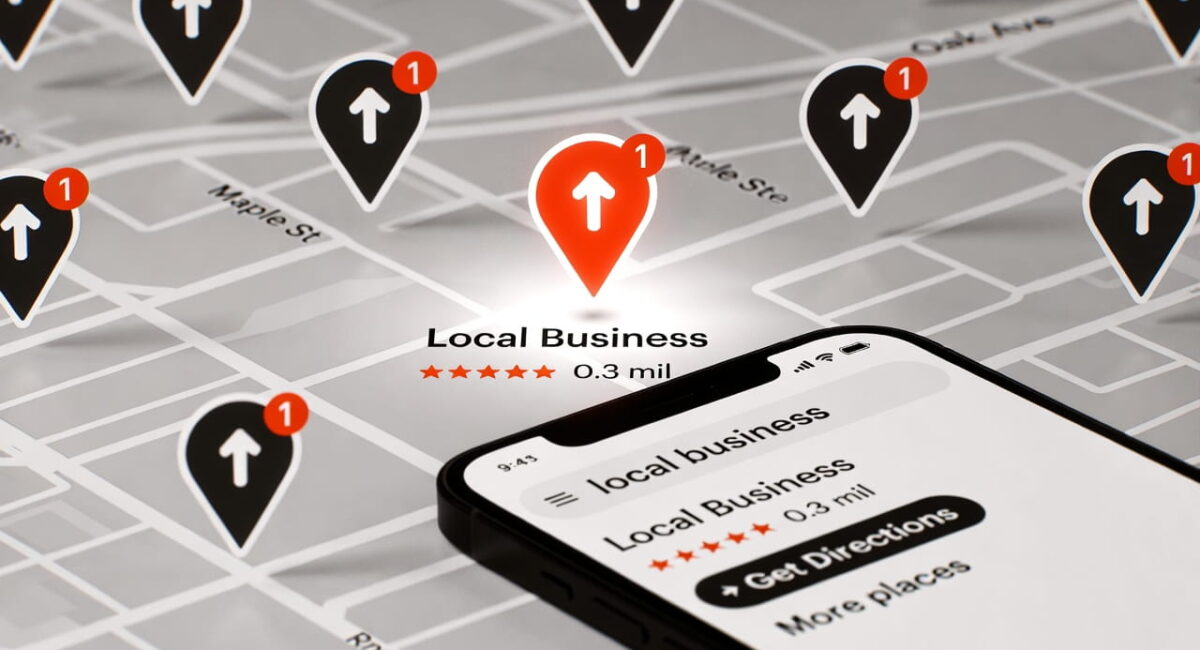
If you run a local business or help one grow you’re sitting on a goldmine: people nearby searching right now for what you sell. Local search is not a vague branding play. It’s high-intent demand: people looking to buy, call, or visit today. Nail it, and your phone rings, foot traffic rises, and leads convert like crazy. Ignore it, and you hand customers to competitors who showed up on the map.
This guide walks through the why, the how, and the exact steps you can take now to turn local search into a consistent lead engine.
Why local search matters (short, convincing case)
- Nearly half of Google searches have local intent searchers are looking for nearby businesses or services.
- A large share of consumers search for local businesses weekly; for many categories this is a daily habit. Showing up where they search matters.
- Listings that appear in the map/local pack see dramatically more clicks, calls and direction requests than listings further down the page. Getting into that pack multiplies your exposure.
Bottom line: local search concentrates buyers at a moment of intent. Optimizing for it is one of the fastest, most measurable ways to grow leads.
The foundation: Google Business Profile (GBP)
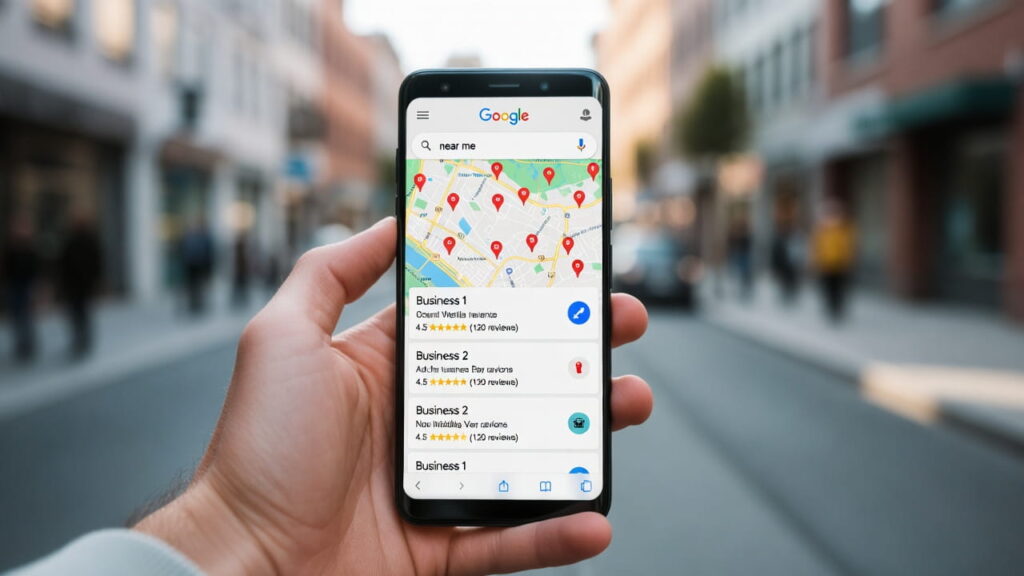
Google Business Profile (GBP) is free and it’s the primary entry point for local search on Google Search and Maps. Treat it like your best salesperson.
What to do (practical):
- Claim and verify your GBP. If someone else created it, claim it. Verification is required to gain full control.
- Complete every field” —” hours (including holidays), categories, services, description, attributes (e.g., “wheelchair accessible”), and phone number. Incomplete listings lose trust and ranking.
- Use accurate NAP (Name, Address, Phone): the same format everywhere (website, directories, social). Inconsistent info drives customers away.
- Add high-quality photos of your storefront, team, products, and interior. Businesses with photos get more clicks and engagement.
- Post regularly: offers, events, and new products show freshness and can influence click-throughs.
Why this pays off: GBP is front-and-center in map pack results, and Google pulls actions (call, directions, website click) directly from it. Fix this before you do anything else.
On-page local SEO: tell Google exactly where you operate
Your website must speak both to humans and to search engines.
Actionable steps:
- Create a local landing page for each service-area or location. Include your city/town names naturally in headings and body copy, and a clear call-to-action (CTA).
- Schema markup: add LocalBusiness structured data (name, address, phone, openingHours, geo coordinates). This helps search engines parse and show your info rich in SERPs.
- Title tags and meta descriptions: include the primary service + city (e.g., “Emergency Plumber Pune | Same-Day Service”). Keep them readable and clickable.
- Mobile-first and fast: most local searches happen on mobile fast pages and clear click-to-call buttons matter. Use lazy-loading for images and keep main CTAs above the fold.
Example: a café with a “menu + reserve” CTA above the fold and schema for LocalBusiness will convert more Map Pack clicks into reservations.
Keywords & content that capture intent
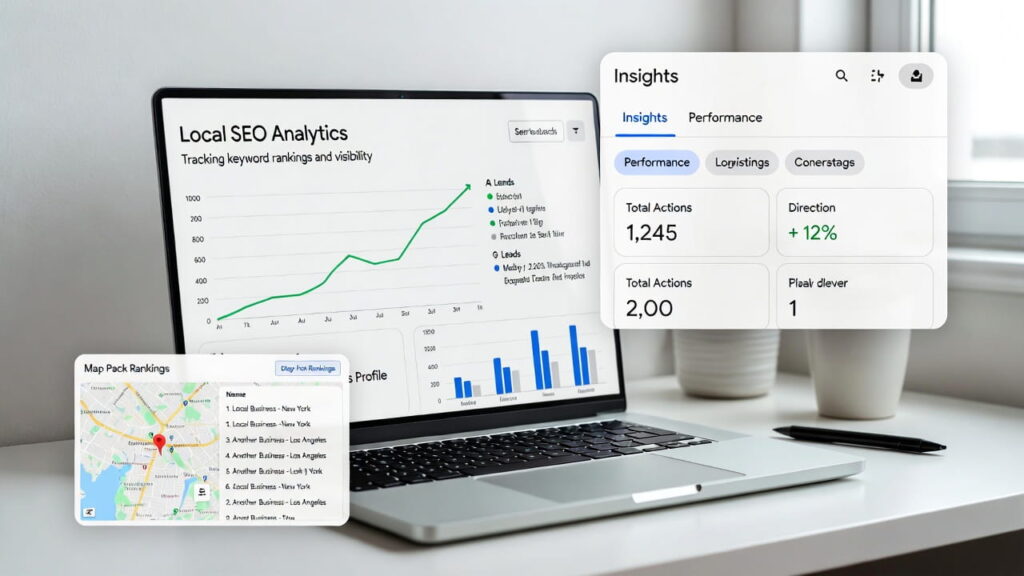
Local search queries are often specific and action-oriented: “best sushi near me,” “AC repair open now,” “plumber in [neighborhood].”
How to capture them:
- Build a keyword map: separate informational (blog) vs. transactional keywords (service pages). Target transactional phrases with location modifiers on landing pages.
- Use “near me” and long-tail phrases where appropriate, and create content that answers common local questions (parking, nearby landmarks, service areas).
- Create short, helpful content for voice queries (people ask differently when speaking). Include FAQ sections that match natural language questions.
Tip: For service-area businesses without a visible storefront, make it clear where you serve (list neighborhoods, zip codes) and use service-area schema.
Reviews and reputation = social proof + ranking signal
Reviews are a key trigger for customers and search engines care, too.
Tactics:
- Ask happy customers to review on Google and niche sites (Yelp, Zomato, Practo) depending on your industry. Make it easy send a link after service.
- Respond to reviews quickly and professionally, positive or negative. This builds trust and shows prospective customers you care.
- Track rating trends: many consumers won’t consider businesses under a certain rating threshold; maintain a high average.
Remember: inaccurate business details or unresolved negative feedback can push customers away—consumers notice inconsistencies.
Local citations, directories, and NAP consistency
Citations (mentions of your business name, address, and phone on other sites) are trust signals.
Do this:
- Audit the top directories in your country and industry. Fix incorrect listings and duplicate entries.
- Use a consistent formatting standard (e.g., “Suite 3” vs “#3, 2nd Floor” pick one).
- Prioritize high-authority directories and local business associations. Automated citation tools help but always verify manually.
Why it matters: consistent citations reduce confusion for search engines and customers and strengthen local ranking signals.
Links, partnerships, and local PR
Local backlinks still matter. They’re not about volume quality and relevance count.
Ideas that work:
- Sponsor a community event and get a mention on the organizer’s site.
- Collaborate with nearby businesses on a co-marketing promotion and trade links.
- Get featured in local media and niche blogs with interviews or expert pieces.
A single relevant local link can move the needle for competitive neighborhoods.
Technical essentials: maps, mobile, speed, and analytics
- Embed Google Maps with a pinned location on your contact or location pages.
- Make contact actions prominent: big clickable phone numbers, “Get directions,” and a simple contact form.
- Measure calls & directions: use call-tracking numbers or Google’s store actions to see which searches turn into real leads.
- Set up conversion tracking in Google Analytics / GA4 and link Google Search Console to GBP to monitor impressions, queries, and clicks.
If you aren’t tracking it, you can’t optimize it.
Quick case study (what small businesses actually achieved)
Local businesses that prioritize GBP + local SEO see tangible gains: higher map-pack visibility correlates with more phone calls, direction requests, and site visits often leading to doubled lead volumes within months after optimization. Several small-business case studies show improved rankings and more client calls after targeted GBP optimizations and local content updates.
(These wins are common when the fundamentals accurate GBP, consistent NAP, reviews, and local content are implemented together.)
The 8-step local search checklist (do this in the next 30 days)
- Claim & verify your Google Business Profile. Fill every field.
- Standardize your NAP across site and directories; fix duplicates.
- Create/optimize location-specific landing pages with schema and CTAs.
- Add photos and post weekly on GBP (offers, events).
- Build a review request process; respond to reviews daily.
- Target transactional local keywords and “near me” phrases with service pages.
- Earn one or two local links (community, press, or partner).
- Set up call tracking and GA4 conversion goals; review weekly.
Common mistakes to avoid
- Incomplete GBP: a half-filled profile is invisible.
- Inconsistent NAP: different formats across sites tank trust.
- Ignoring review: not responding looks like poor customer care.
- Over-optimizing with spammy citations or keyword stuffing: hurts more than helps.
How to measure success (metrics that matter)
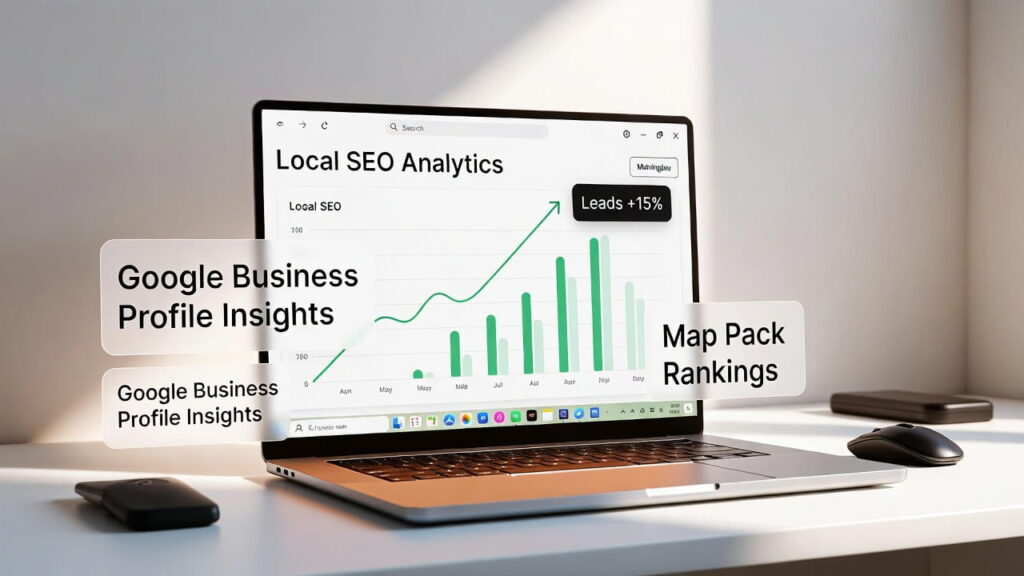
- Map pack impressions and clicks (from GBP and Search Console)
- Calls, direction requests, and website visits attributed to GBP actions
- Conversion rate on local landing pages (phone calls, form fills, bookings)
- Average rating and number of new reviews per month
Also track the actual business outcome: leads per week and lead-to-customer conversion. That’s the ROI you care about.
Final play: prioritize speed + focus on intent
Local search rewards relevance and clarity. Start with GBP and a single high-intent landing page, collect reviews, and measure. Improve one neighborhood or service at a time instead of scattering effort across everything.
If you follow the checklist above, you’ll move from invisible to the map pack and that’s where the highest-intent local customers live. For many local businesses, focused local SEO is the fastest, most cost-effective way to “explode” leads without doubling your ad spend.

Leave a Comment