
How To Do Market Research For to Sell Faster
Most people think “market research” is a big-company thing. Expensive reports, long surveys, months of analysis.
In reality, good market research is simple: find out what buyers actually want, what they will pay, and where they already go to buy. When you do that well, you don’t just “sell more.” You sell faster because you stop guessing, tighten your offer, and aim it at people who are already looking for something like it.
And this matters more than most founders admit. A widely cited analysis of startup post-mortems found the #1 reason startups fail is “no market need” (42%), meaning they built something people didn’t want enough to buy. Even in established categories like FMCG, failure rates for new launches can be brutal. NielsenIQ has cited that over 80% of product launches fail in fast-moving consumer goods.
So the goal of market research isn’t to collect trivia. It’s to reduce the risk of building the wrong thing and to speed up sales by getting three answers right:
- Who is most likely to buy?
- What message makes them say “this is for me”?
- What stops them from buying, and how do we remove that friction?
Let’s break the process into a practical system you can run in days, not months.
Step 1: Start with the “sell faster” questions

Before you look at trends or competitors, get specific about what “faster” means for you:
- Faster from first visit to purchase?
- Faster from first call to close?
- Faster from listing to conversion on a marketplace?
- Faster adoption inside a company (shorter stakeholder chain)?
Now translate that into research questions that drive revenue, not vanity metrics:
Core questions that directly speed up sales
- Problem urgency: How painful is the problem right now?
- Current alternatives: What are buyers using today instead?
- Decision trigger: What makes them go looking for a solution?
- Buying criteria: What do they compare when choosing?
- Deal breakers: What makes them hesitate or say no?
- Willingness to pay: What price feels fair vs too expensive?
- Channel behavior: Where do they search, ask, and shop?
Keep these in front of you. They’ll stop you from “researching everything” and learning nothing.
Step 2: Define your Ideal Buyer like a detective, not a poet
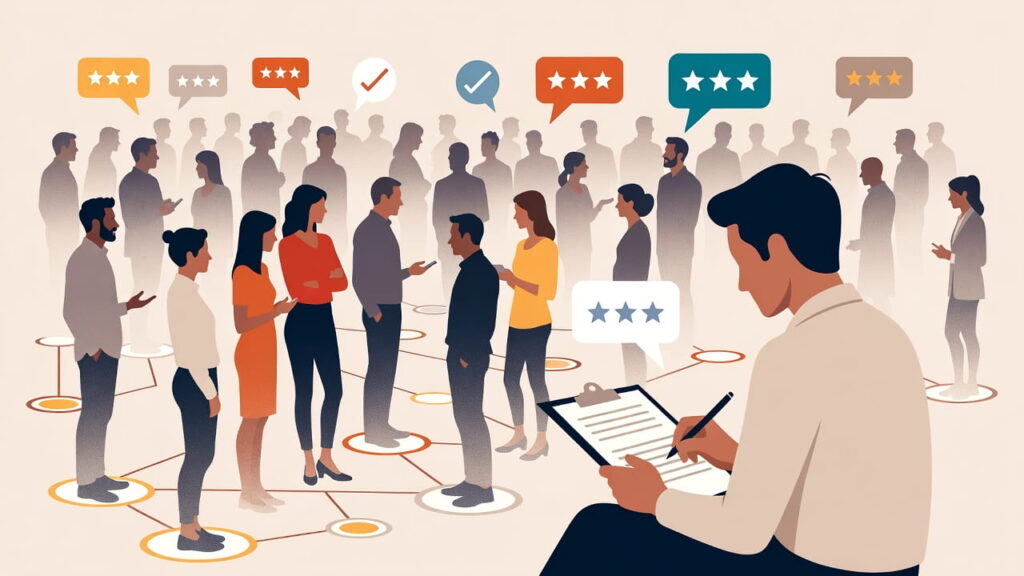
“Small business owners” or “fitness enthusiasts” is too broad to sell fast. Speed comes from targeting people with a clear need and a strong reason to act.
A useful ideal buyer definition has four parts:
- The situation (what’s happening in their world)
- The job-to-be-done (what they’re trying to accomplish)
- The pain (what breaks if they don’t fix it)
- The constraint (budget, time, tools, approval, skill)
Example (B2B)
Instead of: “marketing teams” Try: “Early-stage SaaS marketers running paid ads without a dedicated designer, who need landing pages shipped weekly, but approvals and creative production slow everything down.”
Example (B2C)
Instead of: “people who want to lose weight” Try: “Busy professionals who want simple meal prep, hate counting calories, and are willing to pay for convenience if the food tastes good.”
This matters because “sell faster” almost always means sell to a narrower group first, then expand.
Step 3: Use fast secondary research to map the market in a day
Secondary research (existing data) is the quickest way to understand the landscape before you talk to anyone.
Here’s what to pull:
1) Demand signals (people already searching)
- Google autocomplete and “People also ask”
- Marketplace search results (Amazon, Etsy, App marketplaces)
- Reddit / Quora / community forums (real phrasing of problems)
You’re looking for:
- The exact words buyers use
- The questions they ask before buying
- The objections and “I tried X but…” stories
2) Competitor and alternative scan (not just direct competitors)
Make a simple table:
- Competitor/alternative
- Price
- Promise (headline)
- Who it’s for
- Key feature or differentiator
- Common complaints (from reviews)
Online reviews are gold for this. Large consumer surveys consistently show a big portion of buyers read reviews during evaluation. For example, Backlinko summarizes research indicating 71% of consumers read online reviews when researching businesses. And BrightLocal’s ongoing review research has found most consumers check more than one source, with 74% saying they use two or more websites for reviews of local businesses.
Why this helps you sell faster: you can position your product to avoid the most common complaints and highlight what buyers already say they want.
Step 4: Do primary research that reveals buying behavior (not opinions)

Primary research means you collect fresh data: interviews, surveys, tests.
If you can only do one thing, do customer interviews. They explain the “why” behind buying decisions better than surveys.
A simple interview plan (10 interviews is enough to see patterns)
Aim for:
- 5 people who recently bought something similar
- 5 people who considered it but didn’t buy (or chose a competitor)
Ask questions that pull out real events:
1) “What happened that made you start looking?”
You’re hunting for triggers: deadlines, failures, growth, frustration, a new job, a life event.
2) “What options did you consider?”
This tells you your true competition, which often includes “do nothing” or a messy workaround.
3) “What mattered most when choosing?”
These are buying criteria: speed, trust, ease, support, integration, taste, durability.
4) “What almost stopped you from buying?”
This is pure conversion improvement. These insights directly improve your landing page, offer, and sales script.
5) “What would have made this a no-brainer?”
This reveals what to add (or remove) to accelerate decisions.
Important rule
Avoid “Would you buy this?” questions. People are polite. Instead ask about:
- Past behavior
- Recent purchases
- Specific comparisons
- Actual budgets and constraints
Step 5: Run a quick survey to quantify what you heard
Interviews give you depth. Surveys give you breadth.
Keep surveys short (3 to 8 minutes), and use them to validate patterns:
Good survey questions:
- “Which of these problems is most frustrating right now?”
- “How are you solving this today?”
- “What is the biggest reason you haven’t upgraded to a better solution?”
- “Which option best describes your budget range?”
- “Where do you typically find products/services like this?”
Pro tip: include one open-ended question:
- “In your own words, what are you trying to achieve?”
That gives you copy for ads, landing pages, and product pages.
Step 6: Validate willingness to pay before you “set a price”
Pricing can speed up or slow down sales more than most features.
Start simple:
- Ask interviewees what they pay today and for what
- Use price ranges in surveys (“Which feels most reasonable?”)
- Compare pricing models (one-time, subscription, usage-based)
If you’re more advanced, consider conjoint analysis to estimate willingness to pay by forcing trade-offs. McKinsey has described conjoint analysis as a practical way to uncover willingness to pay because it’s based on choices among full options rather than direct “how much would you pay?” questions.
You don’t need a huge budget to benefit from pricing research. Even a few structured trade-off questions can stop you from underpricing (selling fast but losing money) or overpricing (stalling demand).
Step 7: Translate research into a “fast-selling offer”
This is where most people drop the ball. They collect insights, nod, and then keep selling the same way.
To sell faster, your research should change three things:
1) Your positioning (who it’s for + why you)
Use the buyer’s language and make the outcome obvious.
Bad: “A revolutionary platform for growth.”
Better: “Launch landing pages in 60 minutes without waiting on design.”
2) Your proof (why trust you now)
Add proof that matches the buyer’s risk:
- Reviews and testimonials
- Before/after results
- Case studies
- Guarantees
- Transparent comparisons
Just remember: review ecosystems are not perfect. Reporting has highlighted ongoing problems with fake reviews in some markets and the need for buyers to be cautious.
So focus on credible proof: verified customers, specific results, and screenshots/data when possible.
3) Your friction reducers (what removes hesitation)
Common friction reducers include:
- Free trial or demo
- Clear onboarding
- Templates or “done for you” setup
- Strong refund policy
- Simple packages (too many choices slows buying)
Step 8: Use “message testing” to pick the fastest hook
You can learn more from small tests than from long debates.
Here are quick ways to test messaging:
Option A: Landing page A/B test (best if you have traffic)
Test:
- Headline (promise)
- Primary benefit
- Offer format (trial, discount, bundle)
- Proof elements (testimonials vs stats vs logos)
Option B: Ad test (fast even with small budgets)
Run 3 to 5 ad variations, each with a different angle:
- Speed
- Savings
- Ease
- Quality
- Risk reduction
Let clicks and conversions tell you what resonates.
Option C: “Fake door” test (for features)
Add a button for a feature you’re considering (“Export to Excel”, “AI summary”, “Same-day delivery”).
Measure clicks. If enough people try it, build it next.
Step 9: Build your “Sell Faster” research dashboard
Keep it simple. One page. Update it monthly.
What to track
- Top 3 customer pains (by frequency)
- Top 3 triggers (what starts the search)
- Top 5 objections (what slows the sale)
- Top 5 phrases customers use (copy gold)
- Top competitors and why buyers choose them
- Price range that feels “easy to say yes to”
- Best-performing channel(s)
This becomes your internal playbook for marketing, sales, and product decisions.
Mini case examples (how research speeds up sales)
Example 1: Ecommerce skincare brand
Research insight: Buyers didn’t want “natural ingredients” language. They wanted proof it works for sensitive skin and reassurance about irritation.
Changes made: Before/after photos, allergy-friendly claims with specifics, and a simple routine bundle.
Result: Fewer “Is this safe for me?” questions and quicker checkouts.
Example 2: B2B scheduling tool
Research insight: The real buyer wasn’t the manager. It was the ops coordinator who suffered daily chaos.
Changes made: Targeted messaging to ops roles, templates for common workflows, and a “setup in 30 minutes” onboarding offer.
Result: Shorter sales cycle because the day-to-day user became the internal champion.
Example 3: Local service business (home repairs)
Research insight: People compared based on trust signals, not price: responsiveness, punctuality, and clear quotes.
Changes made: Prominent response time promise, transparent pricing ranges, and review follow-up.
Result: More calls turned into bookings quickly (less shopping around).
Common mistakes that slow sales (and how to avoid them)
Mistake 1: Researching the market, not the buyer
Market size is useful, but buying decisions are what pay you.
Fix: Spend more time on triggers, objections, and alternatives.
Mistake 2: Talking to the wrong people
Friends, random followers, or “interested” people often give misleading feedback.
Fix: Prioritize people who recently bought, tried to buy, or actively feel the problem.
Mistake 3: Asking hypothetical questions
“What would you pay?” and “Would you use this?” often produce fantasy answers.
Fix: Ask about past behavior and real trade-offs.
Mistake 4: Not changing anything after research
If your landing page, offer, and sales pitch stay the same, the research was just entertainment.
Fix: Force yourself to make at least 3 concrete changes based on findings
A simple 7-day market research plan (practical and fast)
Day 1: Define your ideal buyer + research questions
Day 2: Competitor scan + review mining
Day 3–4: 8–10 customer interviews
Day 5: Quick survey (optional but helpful)
Day 6: Synthesize into positioning, objections, and offers
Day 7: Create one improved landing page + one message test (ads or emails)
Run this cycle, then repeat monthly with smaller check-ins.
Conclusion: Market research is a shortcut to momentum
Selling faster isn’t about louder marketing. It’s about clarity:
- Clear buyer
- Clear pain
- Clear promise
- Clear proof
- Clear path to purchase
Market research gives you that clarity, and it saves you from the most expensive mistake: building and promoting something people don’t want enough to buy.
If you want, tell me what you’re selling (product/service + who you think the buyer is), and I’ll turn this into a tight research plan with interview questions and a competitor-review checklist tailored to your niche.
Leave a Comment